.svg)

Get started Alarmy
by scanning the QR code
by scanning the QR code

%201.svg)

As the warm breeze starts rolling in, have you noticed your eyelids getting heavy every afternoon, only to find yourself tossing and turning when it's actually time to sleep? A lot of people find themselves caught between daytime drowsiness and sleepless nights during spring, wondering what's going on.
It's not laziness. Spring sleepiness is a natural response that happens as your body's internal clock adjusts to the changing season.
When spring arrives, sunrise starts noticeably earlier. This shift throws off your body's internal clock. Melatonin release gets delayed, so you don't feel sleepy at the right time at night, and mornings leave you feeling groggy. This daylight change is the most fundamental cause of sleep issues during the seasonal transition.
In spring, daytime temperatures can climb close to 20 degrees Celsius, then drop below 5 degrees by dawn. Your autonomic nervous system works overtime to adapt to these swings, leaving your body feeling drained. That's why you might feel unusually tired even though the weather seems pleasant.
Another factor that disrupts seasonal sleep patterns is a change in activity levels. In spring, outdoor activities naturally increase, which raises daytime fatigue. But that fatigue doesn't automatically translate into deep sleep at night. In fact, excessive physical activity can keep you in an alert state right up until bedtime.
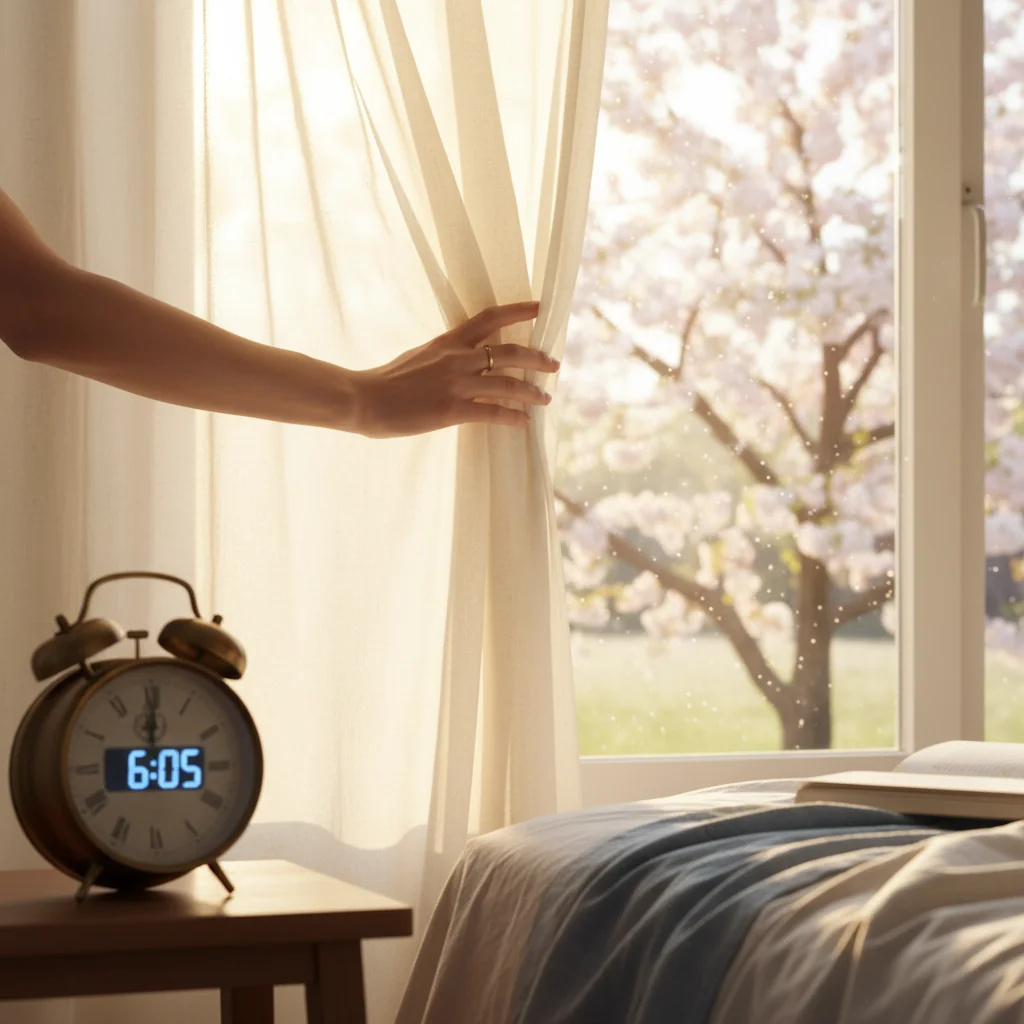
The first thing you can do is wake up at the same time every day — weekends included. After getting up, spend 15 to 30 minutes in morning sunlight. Natural light resets your melatonin timing, helping your internal clock stabilize quickly.
If spring sleepiness has been hitting you hard, start by simply opening your curtains. The moment bright light reaches your eyes, your brain registers that it's morning, and your sleep-wake cycle starts falling into place.
When that afternoon drowsiness hits, sleeping for 30 minutes or an hour will definitely hurt your nighttime sleep. Keep naps under 20 minutes. That way, enough sleep pressure builds up by evening to help you fall asleep naturally.
Try keeping a consistent bedtime routine as well. Simply dimming the lights and putting your phone away at the same time each night signals your body that sleep is coming.
During the seasonal transition, indoor temperature and humidity can fluctuate significantly even within a single day. Keep your bedroom temperature between 18 and 20 degrees Celsius, and use a humidifier if the air feels dry. If you're still using a heavy winter comforter, switching to a lighter spring blanket can make a surprisingly big difference.

At the end of the day, the key to managing your sleep during the seasonal transition is maintaining a regular routine. But sticking to the same wake-up time every day through willpower alone isn't easy.
Setting a daily alarm with Alarmy helps stabilize your internal clock by keeping your wake-up time consistent. The bedtime reminder feature also makes it easier to secure the right amount of sleep. And with sleep tracking, you can monitor how your sleep patterns shift throughout the seasonal transition.
Q. How long does spring sleepiness usually last?
It varies by person, but most people adjust to the new season within 2 to 4 weeks. However, if daytime drowsiness or insomnia persists for more than a month, there may be another underlying cause, and it's worth consulting a doctor.
Q. Is it okay to fight spring drowsiness with coffee?
A moderate amount of caffeine in the morning is fine. But consuming caffeine after 2 p.m. can interfere with nighttime sleep. Rather than relying on coffee alone to push through spring drowsiness, combining a fixed wake-up time with morning sunlight exposure is the more effective long-term solution.
* This article is for informational purposes only and does not replace professional medical advice. Always consult a healthcare provider for health-related decisions.