.svg)

Get started Alarmy
by scanning the QR code
by scanning the QR code

%201.svg)
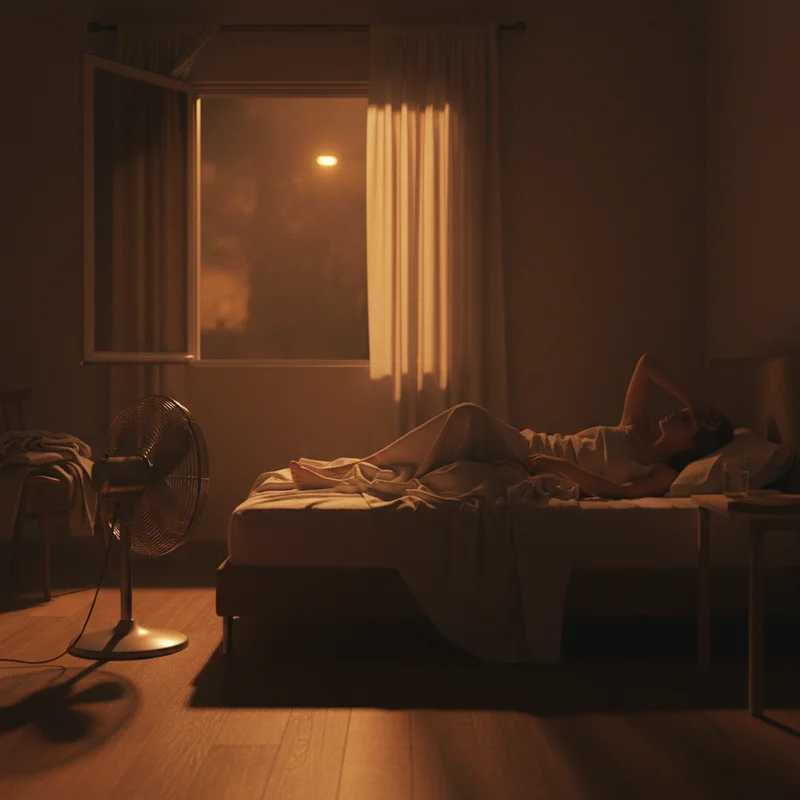
The night you set your favorite song as the alarm felt like a small win. A clean wake-up, a track you actually love, no jarring beeps. Maybe you picked it through Spotify or Apple Music, then put the phone down feeling clever.
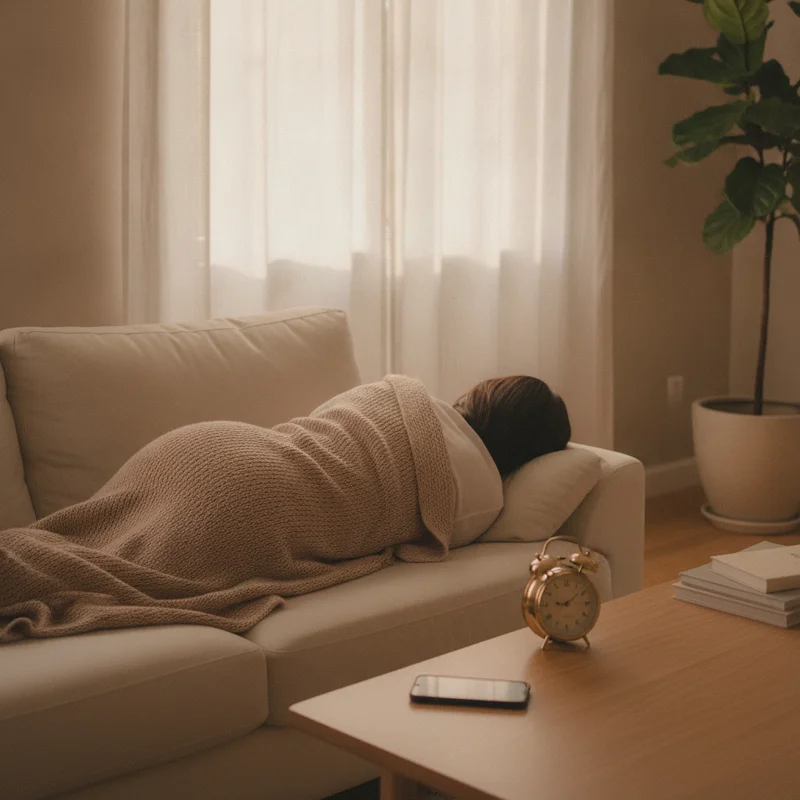
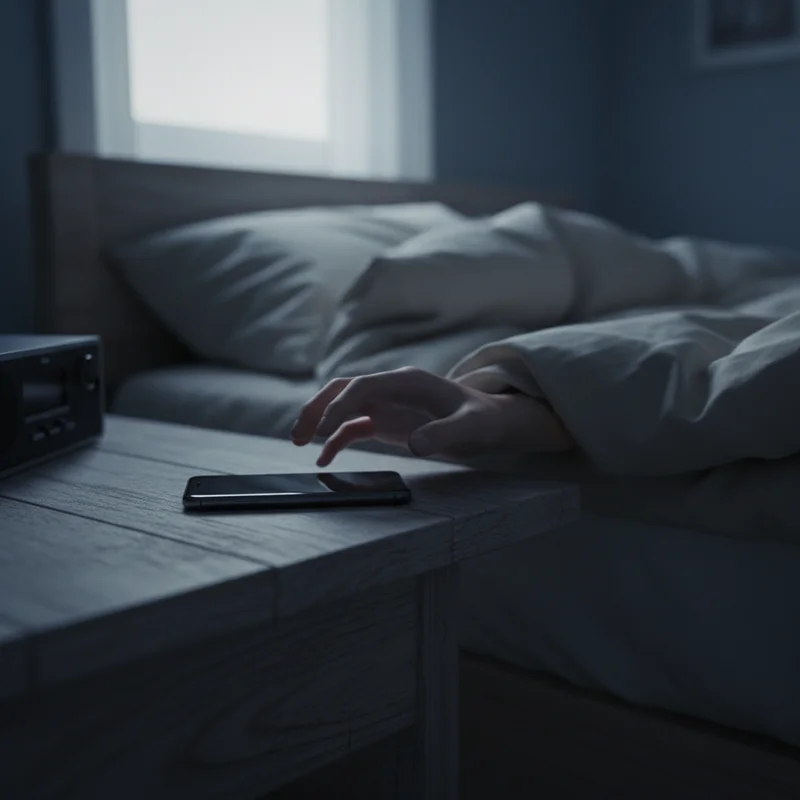
A week later, something strange happened. The song still played. Your roommate could hear it. You slept through every chorus.
It is tempting to blame willpower or a rough week of sleep. But the music alarm vs video alarm ringtone question keeps coming up in search precisely because this isn't a personal failure. Music alarms carry two structural limits that show up within days, no matter how much you love the track. The good news is that the limits are knowable, and the swap is small.
The first limit lives in how your brain handles repeated input. When the same melody plays at the same time every morning, the brain quickly learns the pattern. It begins filing the song as background. Predictable, expected, safe to ignore.

Music makes this worse, not better. A familiar track has predictable rhythm, predictable structure, predictable emotional arcs. Predictability is exactly what your auditory system uses to decide what deserves attention. The first time you hear it as an alarm, the contrast is high. By day seven, the contrast is gone.
People often try to fix this by rotating songs. It helps for a day or two. Then the brain adapts to "music as a category," the same way a city resident stops hearing traffic. This pattern also shows up in iPhone or Android alarm fails to wake heavy sleepers, where the same beep at the same time loses its signal value within a week.
Spotify alarm not waking me up, favorite song alarm fail. These searches share a root cause, not a willpower problem.
The second limit is the opposite of the first, which is what makes it tricky. A song you love does reach you. The problem is what it asks you to do next.
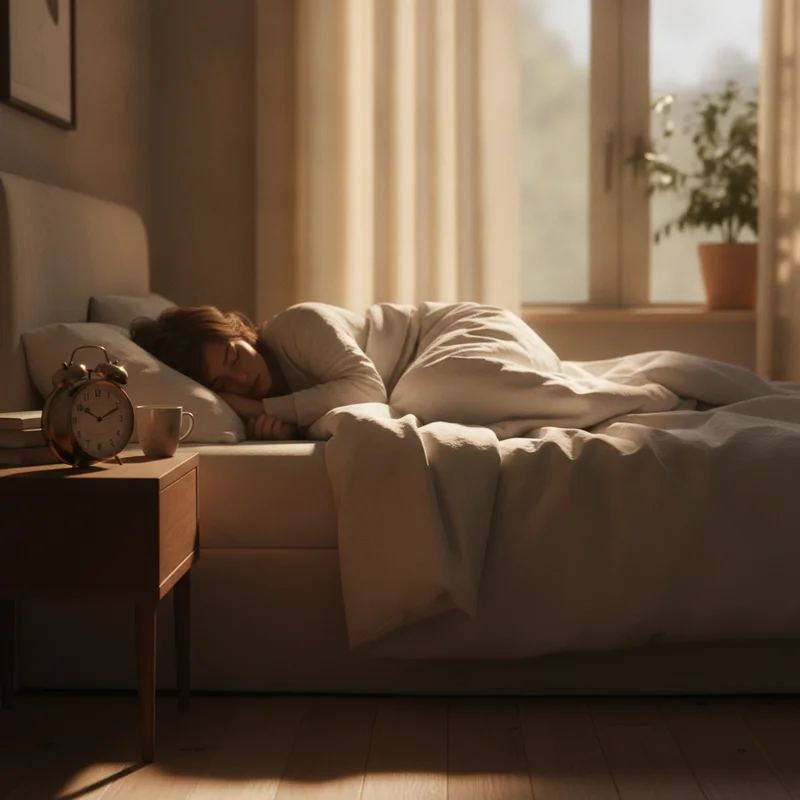
A familiar, pleasant track invites you to stay with it. Finish the chorus. Drift through one more verse. Positive emotion lowers the urgency to dismiss and rise. Apple Music alarm wake-up routines often work for a few mornings, then settle into "five more minutes" because the music itself is the reward, and the reward lives in bed.
This matters most during sleep inertia, the first 5 to 30 minutes after waking, when judgment and motor coordination are still warming up. That window needs input that pushes you out, not input that pulls you back. A song you love does the second thing. The song isn't wrong. It is just the wrong tool for that specific window.
A video alarm doesn't replace audio. It adds layers on top of it. The screen plays a short looping clip while the sound plays, so the wake-up signal becomes auditory plus visual plus cognitive at the same moment.
Three things shift when you stack those layers.
Stacking is the key word. The auditory channel still does its job. The visual and cognitive channels carry the load when the audio adapts. That is why a video alarm tends to hold its signal longer than a single-channel sound, even a song you love.
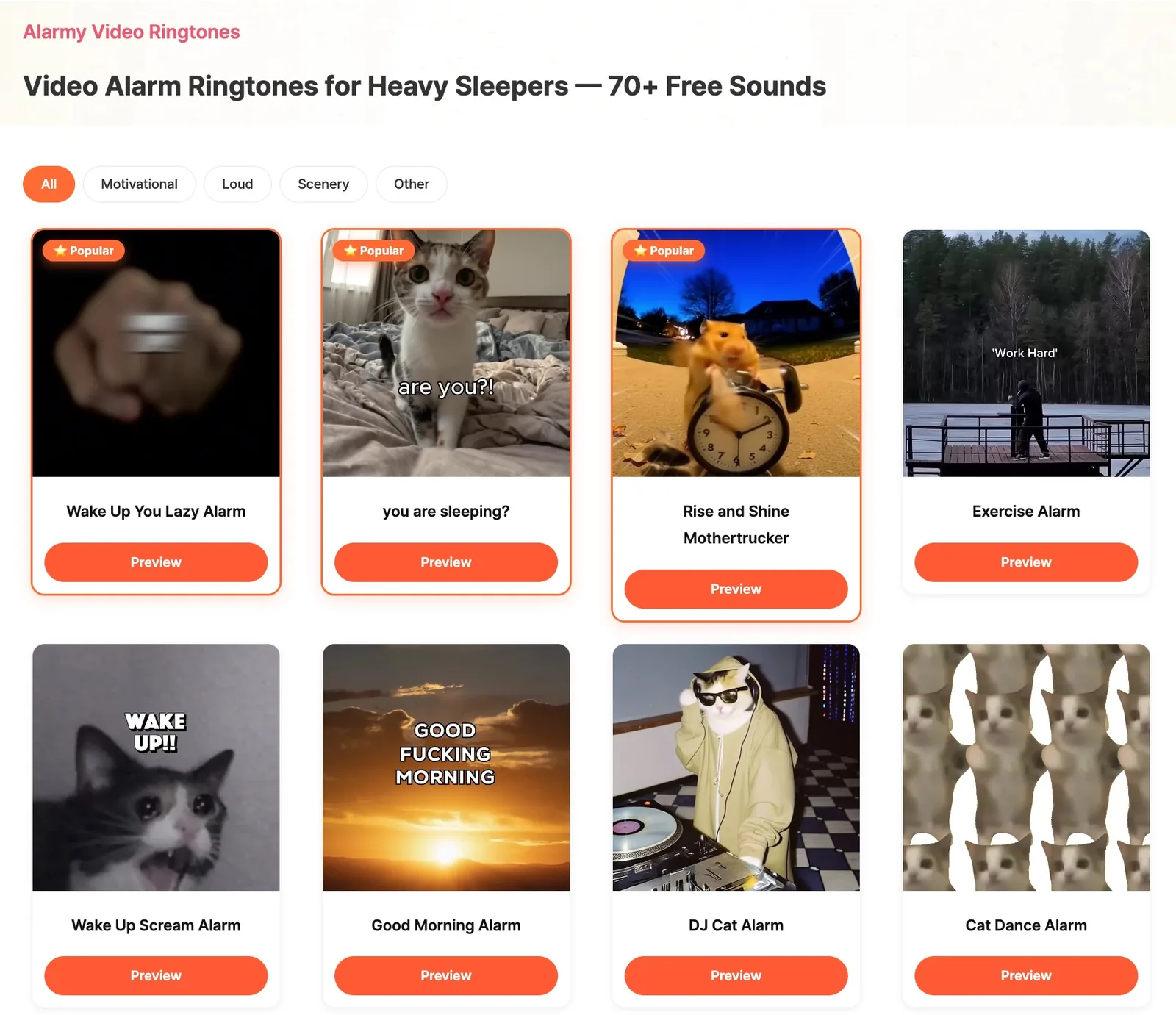
The screenshot above is the Alarmy ringtones page, so you can see what a video alarm actually looks like before deciding whether the shift is worth a week of testing.
Not everyone needs to switch. The honest answer depends on how your current alarm is performing, not on which tool is fancier.
For readers who still want a gentle onset but more variation, the broader sound library is worth exploring. How to choose an alarm sound walks through four tone categories, including the calmer end of the spectrum.
The point is pattern matching. If your body responds to soft cues, soft cues are fine. If you have been dismissing alarms in your sleep, the input needs more channels, not a louder song.
For readers ready to try the swap, here is the practical part. The Alarmy video alarm ringtones library holds 70+ ringtones organized into four categories: motivational, loud, scenery, and other. Each category solves a different reason a music alarm stopped working.

Spoken cues and short coaching clips that push you out of bed. Best when the problem is dismissing alarms while half asleep, since the cognitive layer makes "ignore and roll over" harder.
Higher intensity audio paired with strong visuals. Best when the past failure was "I cannot hear the alarm" rather than "I hear it but stay." Confidence on the first ring is the goal.
Soft visuals such as sunrise, ocean, or forests, paired with calmer sound. Best for people who liked music alarms because the onset felt gentle, but need the visual channel to carry the wake-up load.
Pick one per category for the first week, not five. Fewer choices makes the comparison cleaner.
The pleasure of music is real. Nothing here says you have to give it up. The narrow claim is simpler. For the wake-up window specifically, a video alarm tends to hold its signal longer.
Try one week. Same wake time, same bedtime. Music alarm for three days, video alarm for three days. Count dismiss taps and groggy minutes after each. Let the numbers decide which one actually gets you out of bed.