.svg)

Get started Alarmy
by scanning the QR code
by scanning the QR code

%201.svg)

Attention Deficit Hyperactivity Disorder (ADHD) is a neurodevelopmental condition involving difficulties with focus, impulse control, and executive function. Once thought to primarily affect children, research now shows that roughly 2.5–4% of adults worldwide have ADHD — and many more remain undiagnosed.
The fast pace of modern life, constant multitasking, and complex schedules hit ADHD brains especially hard. What looks like "just being disorganized" from the outside is often a neurological difference that makes everyday tasks genuinely more difficult.

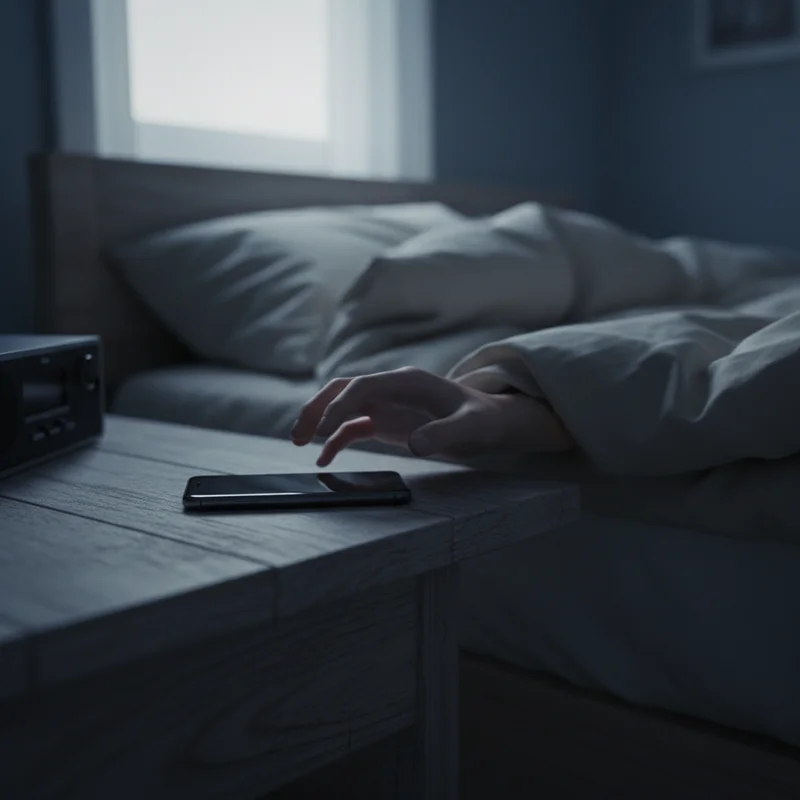
People with ADHD often can't wake up to standard alarms. Their brain's arousal system works differently — making it harder to emerge from deep sleep and easier to reflexively hit snooze and fall back asleep.
This leads to a cycle of oversleeping, running late, missed commitments, and mounting stress. It's not a willpower issue — it's neurological. If you struggle with sleep inertia, that compounds the problem further.
Many people with ADHD experience "time blindness" — difficulty intuitively sensing how much time has passed or how long tasks will take. This makes punctuality a constant challenge, even for important meetings or appointments.
When hyperfocusing on one task, hours can feel like minutes, leading to missed deadlines and strained relationships.
ADHD procrastination stems from weak executive function: difficulty prioritizing, breaking tasks into steps, and initiating work. Facing a complex or boring task triggers overwhelm rather than action.
The result? Tasks pile up until the last possible moment, bringing intense stress and lower-quality output.
Impaired working memory is a core ADHD symptom. You might remember something one minute and completely forget it the next. Even written reminders don't help if you forget to check them.
During multitasking, this gets worse — leading to missed appointments, repeated mistakes, and eroded self-confidence.
ADHD brains crave novelty and find repetition boring. Starting a healthy routine is one thing; maintaining it beyond a few days is another. Impulsive schedule changes and getting sidetracked by new interests make long-term consistency one of the biggest ADHD challenges.

These challenges are exactly what Alarmy was built to address. It's not just an alarm clock — it's a daily structure tool designed to help ADHD brains get moving, stay on track, and build lasting routines.
Alarmy requires you to complete a task — solving a math problem, taking a specific photo, or scanning a barcode — before the alarm stops. Unlike standard alarms that you can dismiss half-asleep, mission alarms engage your brain and physically get you moving.
Combined with snooze limits, this breaks the "just 5 more minutes" cycle that ADHD makes so hard to resist. Check out Alarmy's full range of wake-up missions to find one that works for you.
Mission alarms double as behavioral triggers. If your alarm requires you to photograph your bathroom mirror, that single action kickstarts your morning routine. For ADHD brains, where the hardest part is starting, this physical trigger dramatically lowers the barrier to action.
Set recurring alarms for waking up, meals, medication, work start times, and more. Alarmy lets you visualize your entire day as a series of timed checkpoints.
The habit alarm feature is particularly powerful for ADHD — it turns abstract intentions into concrete, timed prompts that keep your day on rails. Maintaining a consistent daily rhythm is one of the most effective ADHD management strategies.
Attach voice recordings or text messages to any alarm. When the alarm rings, your reminder plays or displays — effectively outsourcing your memory to the app.
For ADHD brains with unreliable working memory, this turns "I'll remember to do it later" into a guaranteed prompt.
ADHD often disrupts sleep patterns, leading to irregular bedtimes and deeper sleep. Alarmy offers alarm sounds significantly louder than your phone's default, ensuring even heavy sleepers wake up reliably.
I have severe ADHD and this app has truly changed my life! I can now start things on time and build healthy routines. Thank you so much for what you do! — MJ from Korea
This app has been an enormous help. As someone with ADHD, I tend to stay up way past my bedtime and just want to keep sleeping in the morning. I used to set 3+ alarms every night and still oversleep. But with this app and its missions, ignoring the alarm is so much harder. The barcode mission is my favorite because it forces me out of bed. It's annoying every morning — which means it's working exactly as intended. — Emily from Australia
I absolutely love this app. I have autism and ADHD. I used to run out of time every morning — couldn't manage hygiene or breakfast, which stressed me out constantly. This app works great even without a premium subscription, and the photo mission is simple. I'm actually saving money now because I don't have to buy breakfast at school anymore. Thank you to the creators of Alarmy. It's a lifesaver for my ADHD. — Jaylyne from U.S.
ADHD isn't about willpower — it's about how your brain is wired. That's why the right external tools can make such a dramatic difference. Alarmy goes beyond a simple alarm clock to provide the structure, triggers, and reminders that ADHD brains need to take control of their mornings and daily routines.

ADHD affects the brain's arousal system, making it harder to respond to standard alarm sounds. Even when the alarm is heard, the impulse to dismiss it and fall back asleep is much stronger. Mission-based alarms that require active engagement — like solving a problem or taking a photo — are far more effective.
Yes. Use repeat alarms set to the same time daily, and attach a voice memo or text note specifying which medication to take. This compensates for the working memory challenges common in ADHD.
Mission alarms work well for kids too. Photo missions (like photographing a toothbrush or backpack) naturally guide them into their morning routine. Adjust the mission difficulty to match the child's age and ability.
The core features most valuable for ADHD — mission alarms, repeat alarms, and snooze limits — are available for free. Start with the free version and upgrade only if you need additional features.
Medication helps with focus and impulse control during the day, but it doesn't solve the morning wake-up problem — you still need to get out of bed and take the medication in the first place. Alarm tools and medication work best as complementary strategies.