.svg)

Get started Alarmy
by scanning the QR code
by scanning the QR code

%201.svg)

You just got back from Europe and it's 11 PM, but your eyes are wide open. During the day, you're fighting off waves of drowsiness in meetings, and by evening, you feel oddly alert. Sound familiar?
Your brain has an internal clock called the suprachiasmatic nucleus. This tiny structure detects light and controls when your body releases melatonin. The reason you experience sleep problems after international travel is that this clock is still synced to your home time zone. Jet lag recovery typically takes a while because your body clock shifts only about 1 to 1.5 hours per day — so after a trip to Europe with a 9-hour time difference, it can take nearly a full week to adjust.
Here's an interesting detail — the difficulty of adjusting depends on which direction you flew. The human body clock actually runs slightly longer than 24 hours. That means traveling west (which extends your day) is generally easier to recover from than traveling east (which shortens it). So flying home from Europe to Asia? That's the tougher direction.
Beating jet lag starts before you board the plane. Three to four days before departure, begin shifting your bedtime and wake-up time by 1 to 2 hours toward your destination's time zone. If you're heading east, that means going to bed earlier and waking up earlier.
You don't need to make drastic changes all at once. Moving your schedule by just 30 minutes to an hour each day can significantly reduce the shock when you arrive.
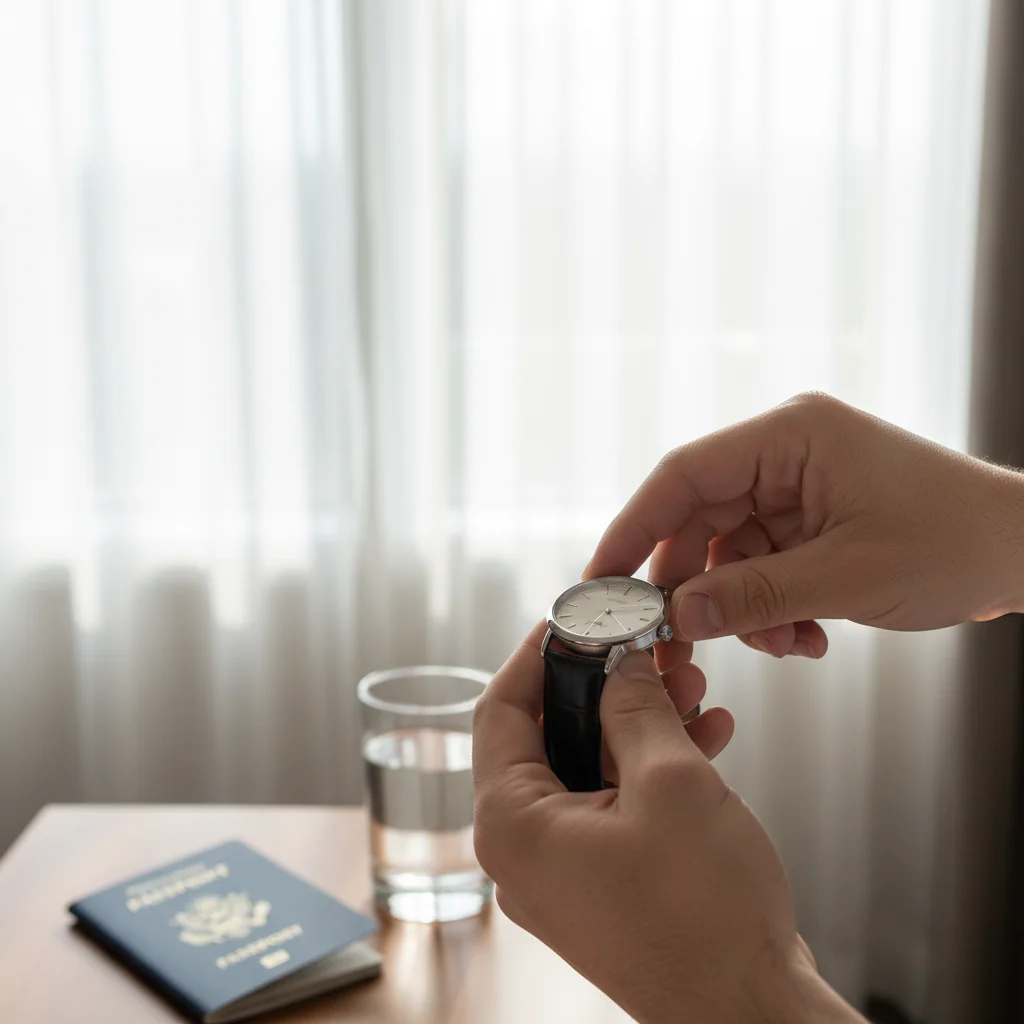
As soon as you board, set your watch to your destination's local time. The key to beating jet lag is resetting your mental clock before your body catches up. If it's nighttime at your destination, try to sleep on the plane. If it's daytime there, do your best to stay awake.
When you drink coffee on the plane matters more than you might think. Avoid caffeine after 2 PM destination time. On the other hand, make sure to stay well hydrated — the low cabin humidity can cause dehydration, which worsens fatigue and makes it even harder to reset your rhythm after landing.
The single most important thing you can do on arrival day is get morning sunlight. Sunlight suppresses melatonin production and sends the strongest possible signal to your body clock to sync with local time. Spending at least 30 minutes outdoors in natural light can noticeably speed up your sleep rhythm recovery after travel.
Meal timing is another factor that's easy to overlook. Your gut has its own biological clock, so eating breakfast, lunch, and dinner at regular local times helps accelerate the jet lag adjustment process.
The drowsiness that hits right after you arrive can feel overwhelming. But giving in to a long afternoon nap sets off a vicious cycle — you won't be able to sleep that night, and the pattern repeats. If you absolutely need a nap, keep it under 20 minutes and finish before 3 PM.
Willpower alone isn't enough to overcome jet lag. No matter how firmly you tell yourself to sleep at the right time, an exhausted body is quick to compromise. Setting a wake-up alarm for the local morning time ensures that at least your start-of-day anchor stays consistent.
The same goes for bedtime. Using a bedtime reminder — like Alarmy's bedtime alert feature — to nudge yourself with a "lie down now" notification helps you systematically rebuild the routine that travel disrupted.
Recording when you fall asleep and wake up each day lets you see exactly when your rhythm stabilizes. Just seeing the numbers improve gives you reassurance that you're almost there, and that motivation helps you push through the remaining days.
At the end of the day, jet lag recovery comes down to structured schedule management. Sunlight exposure, meal timing, and well-placed alarms — piece by piece, your disrupted sleep rhythm finds its way back faster than you'd expect. Try setting an alarm in Alarmy for local wake-up time starting from your very first morning, and give your body the anchor it needs.

* This article is for informational purposes only and does not replace professional medical advice. Always consult a healthcare provider for health-related decisions.