.svg)

Get started Alarmy
by scanning the QR code
by scanning the QR code

%201.svg)
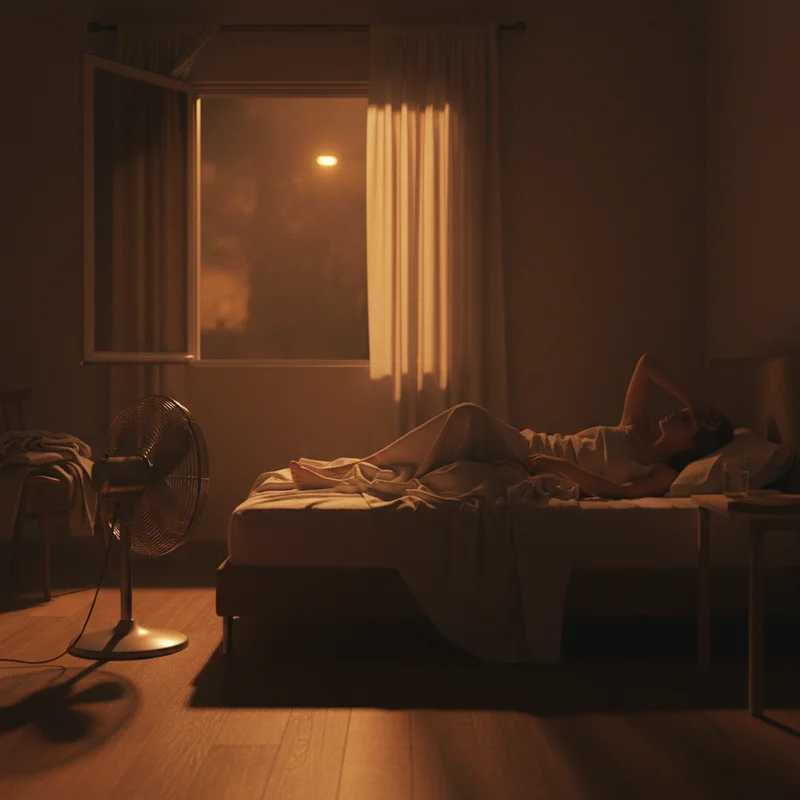
You're under the duvet, eyes closed, body still, but your brain keeps narrating tomorrow. Phone comes back out. Thirty minutes pass. An hour. Sound familiar?
Here's the thing: your body doesn't fall asleep by trying harder. It falls asleep when the nervous system flips from sympathetic mode (alert, scanning, problem-solving) to parasympathetic mode (rest, digest, slow). Slow, deep breathing is one of the few levers you can pull on demand to nudge that switch. It stimulates the vagus nerve, drops heart rate, and lowers blood pressure, which is the chemical version of your body saying "okay, it's safe to let go." Sleep is regulated by both the brain and the autonomic nervous system, so working with that system instead of against it tends to beat willpower.
Shallow chest-only breathing does the opposite. It signals "still alert," keeps cortisol elevated, and quietly prolongs the wide-awake window. Two breathing techniques to fall asleep stand out for being simple enough to do in bed: the 4-7-8 method and box breathing. This isn't a "which is better" piece. It's a matching guide. If our companion piece on things not to do when you can't sleep was the "stop doing this" article, this one is the "try doing this" article.
The 4-7-8 method was popularized by Dr. Andrew Weil and traces back to pranayama yoga. The pattern is asymmetric: a short inhale, a long hold, and an even longer exhale. That long exhale is doing most of the work. It's where the vagus nerve gets the strongest "stand down" signal.
Best for nights when your mind won't stop. Worry loops, replaying conversations, planning Monday at 11 PM. The longer hold and exhale force a slower mental tempo, which is what a racing brain actually needs.
Lie on your back, jaw relaxed. Then:

Most people run out of air on the 8-second exhale the first night. That's normal. The exact seconds matter less than the ratio (1:1.75:2). Scale down to 2 seconds inhale, 3.5 seconds hold, 4 seconds exhale until your lungs catch up. After a week or two, the full count usually feels comfortable.
Box breathing, also called square breathing, is used by Navy SEALs, ER staff, and athletes to regulate stress under pressure. Same tool, different time of day. Its strength is its symmetry: every side is the same length, which makes it brain-dead easy to remember at midnight.
Reach for box breathing when the issue is in your body, not your head. Tight shoulders, clenched jaw, that "wired but tired" feeling. It's also the gentler entry point if you've never done breathwork before. No asymmetric hold to overshoot.
Picture drawing a square in the dark, one side per phase. The visualization gives a wandering mind something quiet to do without becoming another thing to perform. If the count feels short, extend each side to 5 or 6 seconds, but keep all four sides equal.
Pick by what's actually keeping you up, not by which sounds more impressive.
A breathing technique can feel like it doesn't work, when really one of these is in the way.
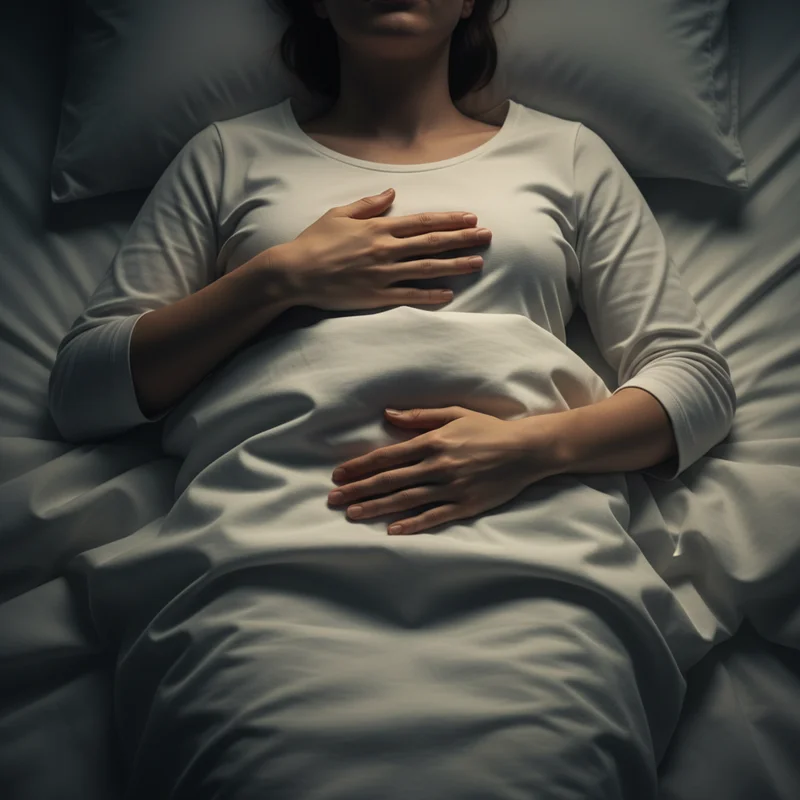
One more honest note: if you've been struggling with insomnia for weeks, snore loudly, or wake gasping, breathing exercises aren't the fix. That's a conversation for a doctor.
The most underrated part of breathwork isn't the technique. It's the timing. Same time, same dim lights, same one or two minutes of breathing. Within a couple of weeks, the cue itself starts pulling you toward sleep, the way a familiar song can make you yawn. A simple bedtime habit alarm (Alarmy's habit alarm works for this) gives you a consistent nudge to start, so you don't have to remember.
If breathing alone isn't enough, audit the obvious: caffeine timing, bedroom temperature, screens after 10 PM. The companion piece on what to skip before bed covers those in detail. Tonight, though, pick one technique, give it three minutes, and see what your body does next.
* This article is for informational purposes only and does not replace professional medical advice. Always consult a healthcare provider for health-related decisions.