.svg)

Get started Alarmy
by scanning the QR code
by scanning the QR code

%201.svg)

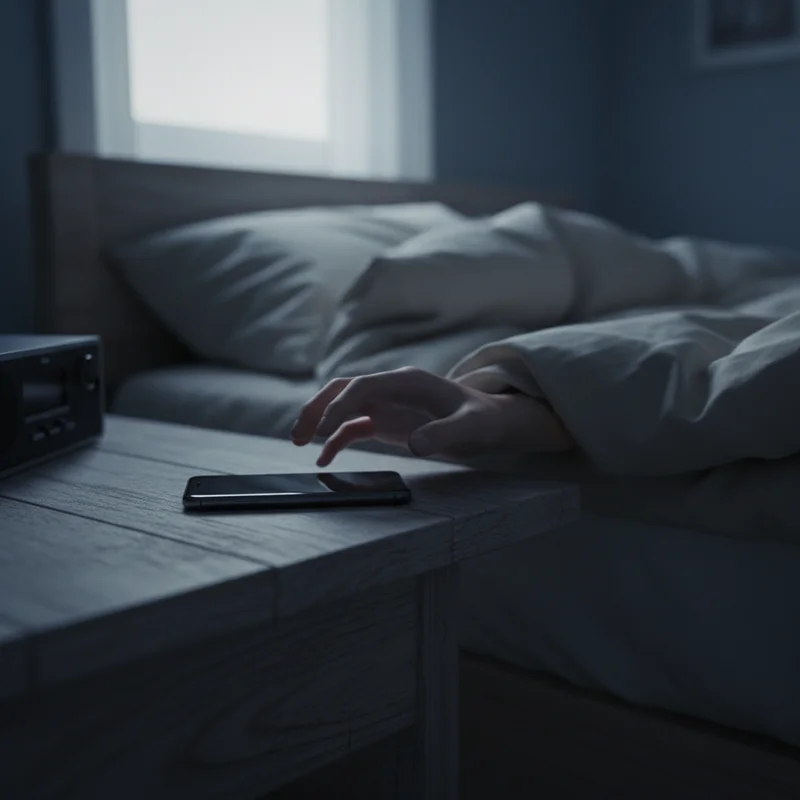
If you instinctively reach for your phone when you can't fall asleep, you're not alone. You tell yourself "just five minutes," open up Instagram or TikTok, and before you know it, an hour has passed. You have an early morning ahead, but your eyes are wider awake than ever.
The truth is, many of the things we unconsciously do on sleepless nights are actually making it harder to drift off. Let's go through five common mistakes people make when they can't sleep — and what actually works instead.
This is the most widespread sleep-sabotaging habit. The blue light from your screen suppresses melatonin, the hormone that signals your body it's time to sleep. On top of that, social media feeds and video content push your brain into an alert state — the exact opposite of where you need to be.
"If I just keep my eyes closed, I'll fall asleep eventually." It sounds logical, but staying in bed while wide awake doesn't build sleep pressure — it builds anxiety. The loop of "why can't I sleep?" keeps reinforcing your state of alertness.
"If I fall asleep right now, I can still get five hours..." Sound familiar? The moment you start calculating your remaining sleep time, your brain shifts into problem-solving mode. Among all sleep-disrupting habits, this one is particularly hard to notice. The more you check the clock, the more anxious you get — and the further sleep slips away.
Some people read books in bed or watch videos on their laptop under the covers. When this becomes routine, your brain stops associating your bed with sleep and starts treating it as just another activity zone. There's a reason sleep experts recommend reserving your bed strictly for sleep.
When sleep won't come, it's tempting to think that exhausting your body will do the trick. But vigorous exercise right before bed raises your body temperature and heart rate, producing the opposite of a calming effect. Late-night eating works against you too — active digestion makes it difficult for your body to shift into rest mode.
This is one of the most fundamental recommendations in sleep science. If you've been lying awake for about 20 minutes, get up and move to the living room or another space. Keep the lights as dim as possible, do some light stretching or quiet reading, and return to bed only when you start feeling drowsy.
The 4-7-8 breathing technique is a well-known option: breathe in through your nose for 4 seconds, hold for 7, then exhale slowly through your mouth for 8 seconds. Progressive muscle relaxation is also effective — tense and release each muscle group from your toes to your head, and you'll notice the tension gradually melting away.
The ideal room temperature for sleep is around 64-68°F (18-20°C). If outside noise is bothering you, try white noise. If light seeps through your curtains, consider blackout curtains or a sleep mask. Sometimes small environmental adjustments make a surprisingly big difference in sleep quality.
Reducing sleepless nights might seem like it's all about sleeping better, but ironically, it starts with waking up better. When you get up at the same time every day, your internal clock stabilizes and the timing of your natural drowsiness becomes more predictable.
Use Alarmy's bedtime reminder to make sure you don't miss your ideal sleep window, and track your sleep patterns to understand how you're actually resting. Setting a consistent morning alarm with Alarmy helps your sleep rhythm fall into place naturally over time.
Q. Does drinking warm milk before bed actually help?
Milk does contain tryptophan, but the amount in a single glass isn't enough to have a meaningful effect on sleep. That said, the simple act of sipping a warm drink can bring a sense of comfort and calm that may help you wind down.
Q. Is it okay to take sleeping pills when I can't sleep?
Relying on sleep medication for occasional insomnia can lead to dependency over time. If you've been struggling to fall asleep for more than two weeks, it's worth consulting a sleep specialist.
* This article is for informational purposes only and does not replace professional medical advice. Always consult a healthcare provider for health-related decisions.