.svg)

Get started Alarmy
by scanning the QR code
by scanning the QR code

%201.svg)

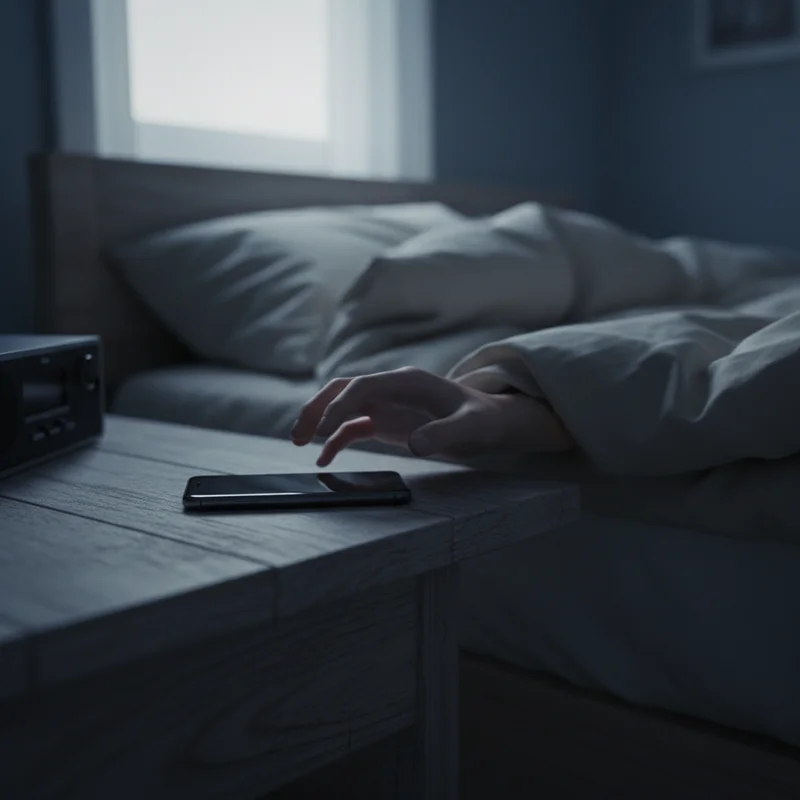
It's 6:30 AM. The alarm sounds. Without opening your eyes, your hand finds the snooze button. "Just 5 more minutes." The alarm rings again. Snooze again. After three or four rounds, it's past 7 and you're scrambling.
This isn't a once-in-a-while thing. It's every morning. And those extra minutes aren't giving you rest — they're making the rest of your day harder.
When you hit snooze and close your eyes, your brain tries to initiate a new sleep cycle. But a sleep cycle takes 90 minutes to complete, and you're interrupting it after 5. Your brain gets pulled into light sleep and then yanked back out, over and over.
The result is sleep inertia — that heavy, foggy state where you're technically awake but can't think straight. A single clean wake-up produces some sleep inertia on its own, but repeated snoozing amplifies it. Each round adds another layer of confusion.
After two or three snooze cycles, your brain has lost track of whether it's time to sleep or time to be awake. Your alertness system can't activate properly, and the fog follows you well past the bedroom. That heaviness you feel every morning might not be from too little sleep — it could be from too much snoozing.

When the alarm fires, your stress response spikes. Hitting snooze delivers instant relief from that tension. That brief moment of comfort acts as a reward, and over time, the sequence — alarm, snooze, relief — locks in as an automatic habit loop. Once it's reinforced, simply telling yourself "I'll get up right away tomorrow" doesn't work.
The reason you can't quit snoozing isn't weak discipline. Your alarm is within arm's reach, and one tap sends you back to sleep. When the environment makes snoozing effortless, changing the behavior through willpower alone is nearly impossible. The fix has to come from redesigning the environment itself.
The simplest fix. Place your phone across the room so you have to physically stand up to turn it off. Once you're on your feet, the hardest part is already done.
A mission alarm requires you to complete a task — scanning a QR code, taking a photo, or shaking your phone — before it stops. There's no snooze option when you're standing in the hallway scanning a barcode. Alarmy also lets you limit the number of snoozes, so if quitting cold turkey feels extreme, you can taper down gradually.
Have one simple thing to do the moment your feet hit the floor. Drink a glass of water. Open the curtains. Splash your face. This micro-routine signals to your brain that the day has started, making it much harder to justify crawling back under the covers.
Sometimes chronic snoozing is just a symptom of not sleeping enough. No anti-snooze strategy will make mornings easy if you're running on five hours. Shifting your bedtime routine forward by 20 to 30 minutes can make the first alarm feel dramatically less painful.
Those 20 to 30 minutes you used to spend in the snooze loop come back as real morning time. Your mind clears faster without repeated sleep inertia dragging it down. There's space to eat breakfast, drink coffee without rushing, or just sit quietly for a few minutes before the day takes over.
The shift doesn't require a dramatic lifestyle overhaul. Start with one change — move your alarm across the room tonight — and see how tomorrow morning feels.


Barely. Five minutes is too short to complete any meaningful sleep stage. Your brain begins entering light sleep but gets interrupted before it can do anything useful. The result is fragmented rest that increases grogginess rather than reducing it.
Effectively, yes. Setting five alarms at 5-minute intervals creates the same fragmented wake-up pattern as hitting snooze repeatedly. Training yourself to respond to a single alarm at a consistent time is better for both your sleep quality and your morning alertness.
For the first two or three days, possibly. Your body is used to the snooze routine and needs time to adjust. After that initial period, most people report feeling more alert in the morning because they're avoiding the repeated sleep inertia that snoozing causes.
If a single alarm truly isn't enough, the issue may be insufficient sleep rather than alarm effectiveness. Track your total sleep time for a week. If you're consistently under seven hours, focus on moving your bedtime earlier before adding alarm strategies.