.svg)

Get started Alarmy
by scanning the QR code
by scanning the QR code

%201.svg)
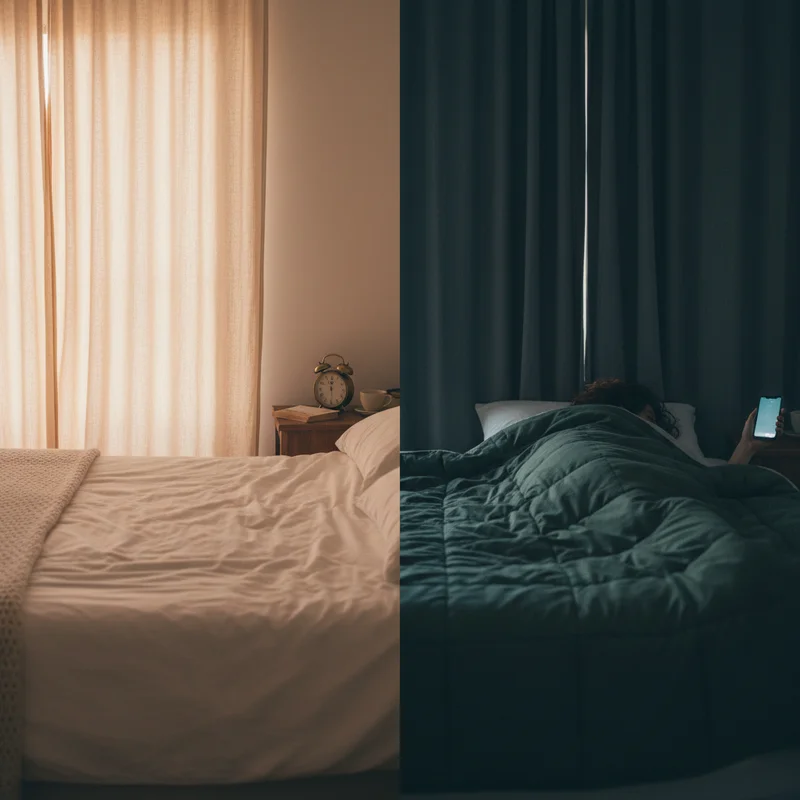
Is it really just willpower that separates morning people from night owls? The wellness internet keeps insisting that anyone can become a 5 AM riser — they just need the right alarm, the right discipline, the right mindset. The reality is messier. A chronotype test exists for a reason: your biology has a preferred sleep-wake schedule, and it's not the same as your neighbor's.
If you've ever forced a 6 AM wake-up for three weeks, only to crash back into 1 AM bedtimes the moment life gets busy, that wasn't a discipline failure. It was your chronotype reasserting itself.
Chronotypes describe the natural timing of your sleep, energy, and focus. Some people are wired to peak before lunch. Others don't really come online until late afternoon. Knowing which group you belong to matters more than copying someone else's morning routine.
Sleep researchers commonly group people into four animal-based chronotypes. The framework was popularized by clinical psychologist Dr. Michael Breus, building on decades of circadian rhythm research. Each type reflects a different pattern of cortisol release, body temperature cycles, and natural sleep pressure. The CDC's overview of sleep covers the underlying biology in more depth.
Lions wake easily before 6 AM, often without an alarm. Their focus peaks in the morning and fades by mid-afternoon. They're the people who happily schedule 7 AM meetings. Lions make up roughly 15% of the population.
Bears follow the solar cycle closely. They wake around 7 AM, hit their stride mid-morning, and start winding down by 9 PM. Most adults — about half — fall into this group. The standard 9-to-5 was essentially designed for bears.
Wolves struggle to wake before 9 AM and don't feel mentally sharp until late morning at the earliest. Their real focus arrives in the afternoon and evening, sometimes peaking after 9 PM. Roughly 15-20% of adults are wolves. Society wasn't built for them.
Dolphins sleep in fragments. They wake easily, often have insomnia symptoms, and feel anxious about sleep itself. Their energy is unpredictable but tends to settle in the late morning. About 10% of people fit this pattern.

This isn't a clinical assessment, but a 5-question self-check is often enough to point you in the right direction. The trick is to answer based on what your body actually wants — not what your schedule demands.
Picture a free week with no obligations. No alarms, no meetings, no Sunday dread. Then run through these:
Whichever animal you picked most often is your likely type. If you're split between two, you're probably a mix — Bear-Wolf and Lion-Bear are the most common combinations. Your weekend sleep pattern is one of the clearest signals, since it shows what your body chooses when nothing forces it.
If you're not sure, track your sleep for two weeks and look at the actual numbers. Self-perception lies more than data does.
Once you know your type, the goal isn't to become a different one. It's to stop fighting your wiring and start working with it. Here's what each type's day might look like when aligned with biology. For wolves and dolphins who still want to shift earlier, there's a realistic version of becoming a morning person that doesn't require pretending to be a lion.
Lions should protect their morning hours fiercely. That's when their best work happens. Save admin and email for early afternoon.
Bears thrive on consistency. The classic morning-coffee, meetings-after-10, dinner-at-7 rhythm fits naturally.
Wolves do best with late starts and protected evening focus blocks. If your job allows flexibility, claim it.
Dolphins benefit most from sleep hygiene strictness. Routine matters more than total hours.
Most readers arriving here are wolves with bear-shaped jobs. The shift you can realistically make isn't dramatic. It's slow, repeatable, and respects how your brain actually adjusts.
Going from a 1 AM bedtime to 11 PM in one night doesn't work. Your body resists, and you spend the first hour staring at the ceiling. Move bedtime 15 minutes earlier every 3-4 days. After two weeks, you've shifted by an hour. After a month, two hours. That stays.
Light is the strongest signal your circadian system uses. Get 10-15 minutes of bright outdoor light within 30 minutes of waking — even on cloudy days. In the evening, dim indoor lights after 8 PM and avoid bright screens for the last hour before bed. This nudges melatonin release earlier without supplements.
Some shifts are realistic. Others aren't. If you've consistently tried for two months and still need an alarm screaming at you to get out of bed, you've hit a biological wall. That's fine. The goal becomes a workable compromise — maybe waking at 7:30 instead of 6:30, with focused work shifted later in the day.
For the actual getting-out-of-bed part, willpower often loses to sleep inertia. Apps like Alarmy take a different angle here: a mission-based alarm makes you complete a task — solve a math problem, snap a photo of your bathroom sink — before it stops, which forces enough cognitive engagement that going back to sleep stops being an option. Tracking your real sleep pattern matters too, since shift attempts are easier to evaluate when you can see when you actually fell asleep and how long you slept rather than guessing. The snooze button habit is another quiet saboteur of any shift plan — fragmented snooze sleep undoes the gains you've made.


Slightly, and slowly. Chronotypes shift naturally with age — teens trend later, older adults trend earlier. You can also nudge your rhythm by 1-2 hours through consistent light exposure and bedtime discipline. But a wolf rarely becomes a lion. Aim for a livable compromise, not a transformation.
The 4-animal framework is a popularized model based on real circadian biology, but the gold-standard tools researchers use are longer questionnaires like the MEQ (Morningness-Eveningness Questionnaire). A 5-question self-test is directionally useful, not diagnostic. If you want a clinical answer, a sleep specialist can run more rigorous assessments.
Mixed types are normal. Many people land between Bear and Wolf, or Lion and Bear. Use whichever description fits best for your peak hours and natural bedtime, then borrow tactics from both. The framework is a starting point, not a strict identity.
No, but it masks it. Caffeine can make a wolf feel functional at 8 AM, but the underlying chronotype hasn't moved. It also has a long half-life — a 2 PM coffee can still be in your system at 10 PM, pushing your natural bedtime later and reinforcing the night-owl pattern you're trying to shift.
* This article is for informational purposes only and does not replace professional medical advice. Always consult a healthcare provider for health-related decisions.