.svg)

Get started Alarmy
by scanning the QR code
by scanning the QR code

%201.svg)
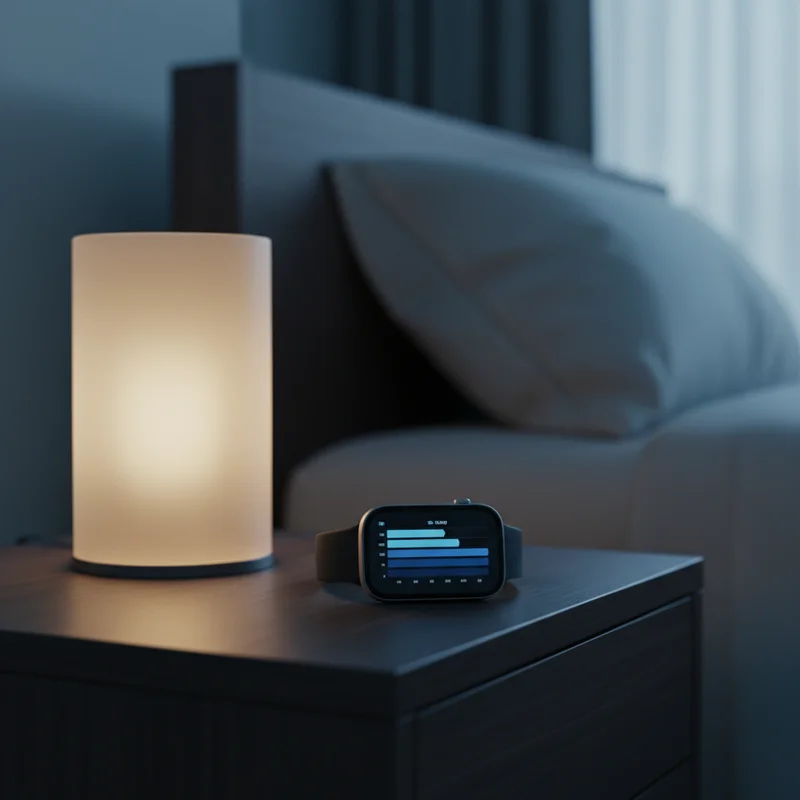
You check your smartwatch in the morning and see it: deep sleep, 45 minutes. Out of seven and a half hours, that's barely 10%. Something feels off.
Most wearable users notice this and assume they're doing something wrong. The number looks small, the bar on the graph looks tiny — and now you're wondering if that explains why you still feel tired some mornings.
The short answer: it depends. Deep sleep percentages are often lower than people expect, and what looks alarming on a graph isn't always a problem. But there are real signs that your deep sleep is suffering, and there are concrete things you can do about it.
Deep sleep — technically called N3 or slow-wave sleep — is the stage where your body does its heaviest lifting. It's not just rest. It's active biological maintenance.
During N3, blood flow to muscles increases, tissue repairs itself, and your immune system gets a meaningful boost (NHLBI: Sleep Basics). This is why people recovering from illness or intense exercise often sleep longer and more deeply — the body is demanding the resources it needs.
If you've been getting sick more often, or physical recovery feels slower than it used to, low deep sleep could be one contributing factor.
The bulk of nightly growth hormone release happens during deep sleep. In adults, this hormone plays a role in muscle maintenance, fat metabolism, and cellular repair — not just growth in the traditional sense.
Memory consolidation also happens here, though it works differently from REM sleep. Deep sleep tends to handle procedural and motor memories, while REM handles emotional and narrative memory. Both matter for feeling mentally sharp the next day.

Deep sleep (N3) typically accounts for 13–23% of total sleep time in healthy adults (Sleep Foundation: Stages of Sleep). For someone sleeping 8 hours, that works out to roughly 60–110 minutes. Most sleep trackers show a percentage, but the absolute minutes can be more meaningful than the ratio alone.
This range comes from polysomnography research — the gold standard of sleep measurement. Your wearable is less precise, but it still gives a useful ballpark. If you're consistently landing in or near that range, your body is likely cycling through deep sleep adequately.
Occasional low nights are normal. Sleep architecture varies day to day based on stress, activity, and what you ate. A single night at 8% doesn't mean something's wrong.
Deep sleep naturally declines with age, and this is one of the most consistent findings in sleep research. Adults in their 20s tend to get the most slow-wave sleep. By the 60s and 70s, percentages dropping below 10% is common — not a disorder, just normal physiological change.
If you're older and seeing low numbers, that context matters a lot. Comparing your deep sleep percentage to a 25-year-old's baseline isn't especially useful.
Numbers aside, the more telling signs show up during the day. Watch for these:
Persistent physical fatigue
Frequent illness
Slow physical recovery
Waking unrefreshed
Intense morning grogginess
That last one is worth paying attention to. Being startled awake by a loud alarm while still in deep sleep is one of the main reasons mornings feel brutal, regardless of how many hours you logged.
These aren't tricks. They're lifestyle factors with consistent evidence behind them.
Going to bed and waking at the same time — including weekends — anchors your circadian rhythm. Your body starts anticipating sleep and distributes deep sleep cycles more efficiently. Irregular schedules fragment that architecture.
Regular physical activity is one of the strongest predictors of deep sleep quality. Morning or afternoon exercise tends to work best. Late-night intense workouts can elevate core body temperature and delay sleep onset, which shortens your first deep sleep cycle.
A consistent bedtime routine combined with afternoon exercise is a pairing that consistently shows up in sleep hygiene research.
Alcohol is probably the most underestimated disruptor. It helps people fall asleep faster, which makes it seem like a sleep aid — but it suppresses N3 sleep in the second half of the night. You might log 8 hours and still wake up feeling hollow.
Caffeine is the other issue. Its half-life is around 5–6 hours (Sleep Foundation: Caffeine and Sleep), so a 3 PM coffee can still affect sleep quality at 9 PM.
Core body temperature drops during deep sleep. A room that's too warm fights that process. Research generally points to 65–68°F (18–20°C) as a comfortable range for most adults — noticeably cooler than daytime room temperature, but not cold.
If you use Alarmy to track sleep, monitoring your deep sleep trends over two to four weeks can help you see whether a habit change is actually making a difference. Small adjustments often take a week or two to show up in the data.

One last thing: how you wake up matters too. Being jolted out of deep sleep by a sudden alarm triggers sleep inertia — that 30-minute fog where your brain barely functions. A gradual wake-up, where sound builds slowly over several minutes, tends to feel noticeably smoother. Alarmy's Gentle Wake feature works this way, and it's worth trying if mornings have been rough lately.
Yes, for most healthy adults. Deep sleep is most concentrated in the first half of the night. If you go to bed very late or get fewer than 6 hours total, the body tends to prioritize REM in the back half — so deep sleep can end up shorter than usual.
It's rare in healthy adults. Very high deep sleep percentages sometimes appear during recovery from significant sleep deprivation or illness. If you consistently see unusually high numbers alongside other symptoms, it may be worth discussing with a doctor.
Several factors drive daily variation: stress levels, alcohol intake, exercise timing, total sleep duration, and room temperature. A single outlier night isn't meaningful on its own. What matters is the trend over two to four weeks.
* This article is for informational purposes only and does not replace professional medical advice. Always consult a healthcare provider for health-related decisions.