.svg)

Get started Alarmy
by scanning the QR code
by scanning the QR code

%201.svg)
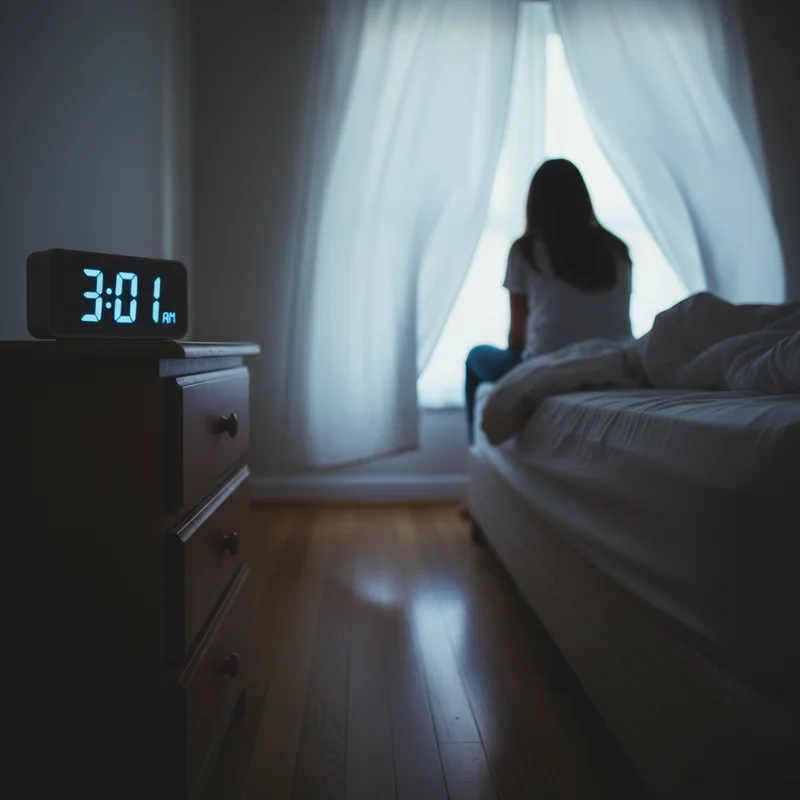
You fell asleep fine. Maybe even passed out the moment your head hit the pillow. But now it's 3 AM, your eyes are wide open, and your brain has decided it's time to review every awkward thing you've ever said.
This isn't random bad luck. It's rooted in how your sleep cycles work. During the first half of the night, your body prioritizes deep sleep (slow-wave NREM stage 3). That's the phase where a fire alarm might barely register. But as the night progresses, your sleep shifts toward lighter stages and more REM sleep.
By 3 or 4 AM, most people are cycling through sleep stages where the arousal threshold is low. Small disruptions — a sound, a full bladder, a stress spike — can pull you awake. According to the Sleep Foundation, this shift in sleep architecture is normal and happens every night. The question isn't why you wake up — it's what's making the waking stick.
Multiple factors can turn a brief arousal into a full awakening. Here are the six most common ones, each with a practical fix.

Cortisol, your body's stress hormone, naturally begins rising in the pre-dawn hours to prepare you for waking. When you're chronically stressed, this surge starts earlier and hits harder. The result: your brain registers it as a wake-up signal before your alarm ever goes off.
Try this: Write down tomorrow's worries before bed. A brief "worry dump" on paper offloads the mental loop that fuels early cortisol release.
A glass of wine may help you fall asleep faster, but alcohol disrupts the second half of your night. As your body metabolizes it — typically 3 to 4 hours after drinking — sleep becomes fragmented. REM sleep suffers, and you're more likely to wake up and stay awake. If you notice a pattern on nights you drink, caffeine isn't the only substance with a cutoff time.
Try this: Stop drinking at least 3 hours before bed. Hydrate with water after your last drink.
Eating a heavy meal late at night can spike blood sugar, followed by a crash that triggers cortisol and adrenaline. Going to bed on a completely empty stomach can do the same — your blood sugar drops low enough that your body releases stress hormones to compensate.
Try this: A small snack with protein and complex carbs (a handful of nuts, yogurt) about an hour before bed can stabilize levels overnight.
If your airway partially or fully closes during sleep, your brain sends an emergency arousal signal. You might not remember waking, but these micro-awakenings fragment your sleep dozens of times per night. Loud snoring is one of the most common warning signs, especially if a partner notices you gasping or going silent mid-snore.
Try this: If you snore heavily or wake up with a dry mouth and headaches, talk to a doctor about a sleep study.
Waking once to use the bathroom is normal. Waking two or three times points to fluid timing or an underlying issue. Drinking water close to bedtime fills the bladder at exactly the wrong time, and caffeine or alcohol accelerate the process.
Try this: Front-load your hydration earlier in the day. Taper off fluids 2 hours before bed.
Your core body temperature drops to its lowest point in the early morning hours. If your room is too warm, the mismatch can trigger waking. Noise intrusion — garbage trucks, birdsong, a partner's movement — also hits harder during light sleep phases. A thorough sleep environment audit can reveal issues you've been overlooking.
Try this: Keep the bedroom between 60-67°F (15-19°C). Use blackout curtains and a white noise source if needed.
Waking up isn't always the problem. Staying awake is. Here's what helps when you find yourself staring at the ceiling at 3 AM.
The moment you see "3:17 AM," your brain starts calculating how many hours are left. That math triggers anxiety, which triggers cortisol, which keeps you awake longer. Turn your clock away from the bed and resist the phone check.
If you can't fall back asleep within roughly 20 minutes, get out of bed. Move to a chair or another room, do something low-stimulation — read a physical book, listen to a calm podcast — and return only when you feel drowsy. This is called stimulus control, and it prevents your brain from associating the bed with wakefulness. For more strategies, see what not to do when you can't sleep.
Inhale for 4 seconds, hold for 7, exhale slowly for 8. This breathing pattern activates your parasympathetic nervous system, the branch responsible for calming your body down. Three to four cycles is usually enough to feel a shift.
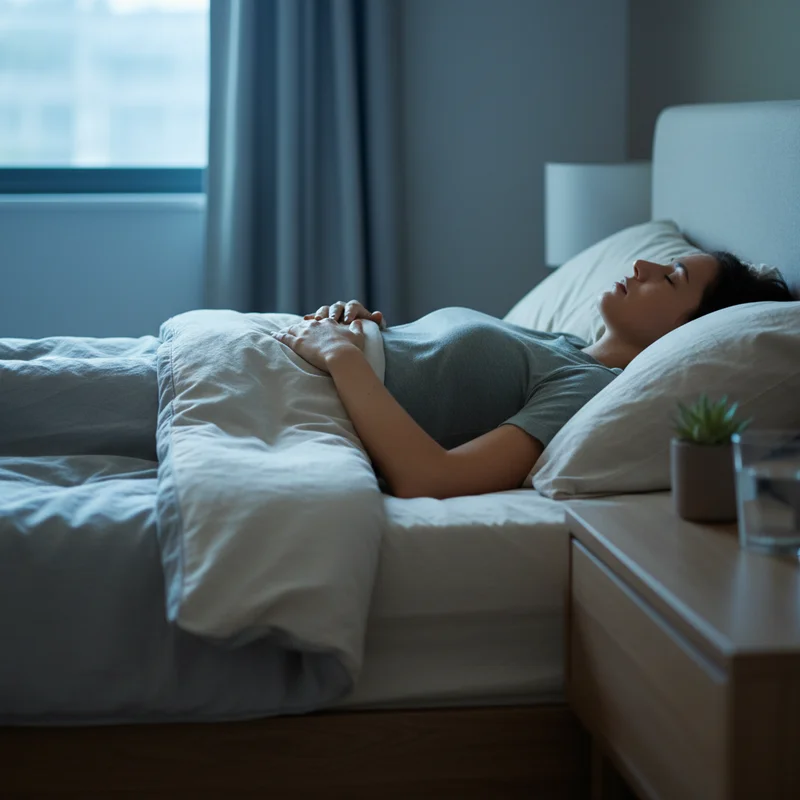
Starting from your toes, tense each muscle group for 5 seconds, then release. Work your way up to your face. The contrast between tension and release signals your body to let go of physical stress you may not even realize you're holding.
The six causes above overlap. Stress might combine with alcohol on certain nights. Environmental noise might only matter when you're already sleeping lightly due to blood sugar issues. The most effective way to identify your specific trigger is to track it.
Alarmy's sleep analysis feature records when you wake up during the night and how long those awakenings last. Over a week or two, you'll start to see whether your awakenings cluster around the same time, happen more on certain days, or correlate with habits from earlier that evening.
Pairing that data with a consistent bedtime — something a bedtime reminder helps enforce — stabilizes your sleep cycles so the second half of the night is less fragile. And when you do need to wake up in the morning, a smart alarm that targets your lighter sleep phase means you're not jolted awake from deep sleep, which makes the whole night feel less disruptive.

Occasional waking is normal, especially as you age. But if it happens most nights and you can't fall back asleep, it may point to an underlying issue like sleep apnea, anxiety, or hormonal changes. Mention the pattern to your doctor, particularly if daytime fatigue is significant.
Melatonin primarily helps with falling asleep, not staying asleep. According to the NIH, it's most effective for circadian rhythm issues like jet lag. For mid-night waking, addressing the root cause is more effective than adding a supplement.
Not for long. Sleep specialists recommend the 20-minute rule: if you're still awake, get up and do something quiet in low light. Lying in bed while anxious teaches your brain that bed equals wakefulness — exactly the opposite of what you want.
Yes. Anxiety elevates baseline cortisol, and since cortisol naturally rises in the pre-dawn hours, the combination can cross the arousal threshold at a consistent time. Addressing the anxiety — through journaling, therapy, or relaxation techniques — often resolves the pattern.
* This article is for informational purposes only and does not replace professional medical advice. Always consult a healthcare provider for health-related decisions.