.svg)

Get started Alarmy
by scanning the QR code
by scanning the QR code

%201.svg)
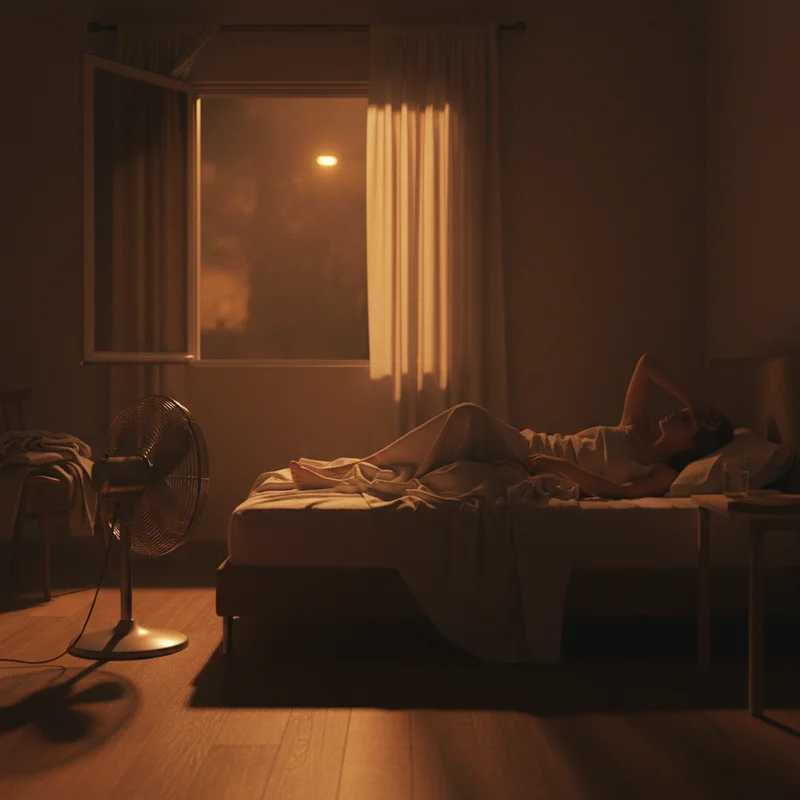
You lie there at 1 a.m., sheets kicked off, fan pointed straight at your face, and sleep just won't come. By the time you finally drift off, the alarm is almost ready to ruin everything.
If that sounds like your last few summer nights, here's the reassuring part: this isn't a willpower problem. Your body literally cannot cool down enough to fall asleep when the room stays hot. The mechanism is working against you, not your discipline.
So let's get practical. This guide covers why heat keeps you awake, what the best temperature for sleep actually is, six things you can try tonight, and how to handle the heavy morning that a bad night leaves behind.
Your body starts winding down for sleep by dropping its core temperature about 1°C. That dip is one of the signals that tells your brain it's time to sleep. According to the Sleep Foundation, this temperature drop is closely tied to your natural sleep-wake rhythm.
A hot bedroom blocks that drop. Your body keeps trying to shed heat, can't, and stays in a more alert state. The result is delayed sleep onset and a night broken into pieces, which is the classic shape of summer insomnia.
Fragmented sleep is the bigger problem. Even when you do drift off, heat pulls you back toward lighter stages and you surface again and again, sometimes without fully waking.
Most people sleep best in a cool room, somewhere around 18–20°C (mid-60s°F), with humidity between 40 and 60 percent. You don't need to hit those numbers exactly. The goal is simply a room cool and dry enough that your body can keep losing heat through the night.
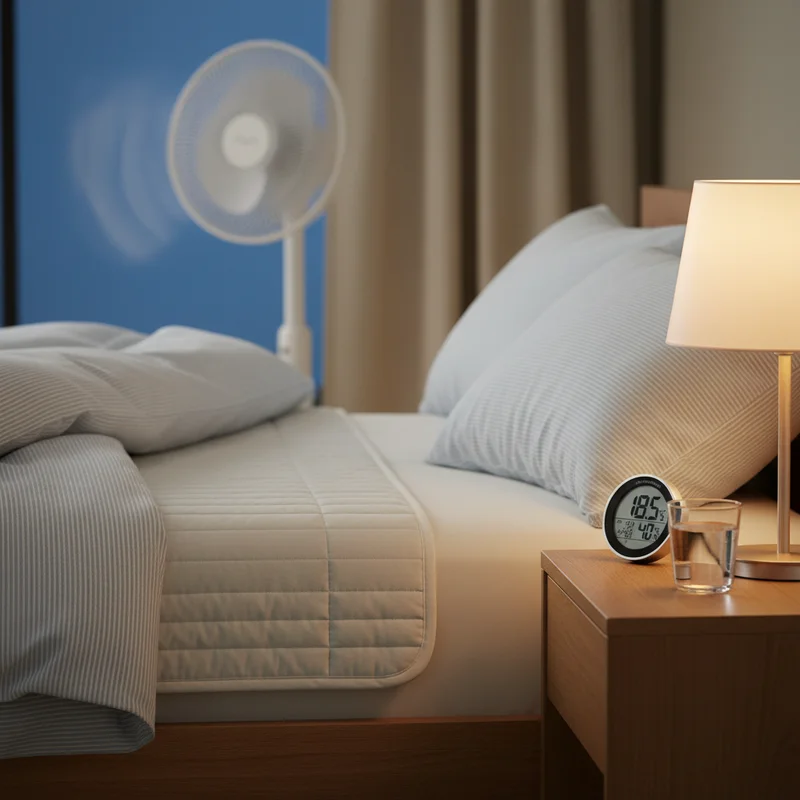
You can't change the weather, but you can change how much heat your body has to fight. Here are six fixes, from the room itself down to what's in your glass before bed.
Aim for that cool, dry zone rather than blasting the coldest setting. If you run an AC, use sleep mode or a timer so it cools the room early and eases off later. A fan helps too, since moving air carries heat away from your skin.
Pro tip: point the fan to cross the room rather than straight at your body all night, which can leave you stiff and dried out.
A warm (not hot) shower an hour or two before bed sounds backwards, but it works. The warmth widens the blood vessels near your skin, so your body releases heat more easily afterward and your core temperature falls.
Pro tip: finish the shower well before lights-out, giving your body time to cool down rather than climbing into bed still warm.
Heavy synthetic sheets trap heat and sweat against you. Swap them for breathable linen or cotton, and choose loose, light sleepwear in the same fabrics. A cooling pad on top of the mattress can take the edge off a stuffy night.
Pro tip: keep a spare top sheet nearby so you can change out anything damp without fully waking up.
Sticky air feels hotter and makes sweat slower to evaporate, which is half the misery of a tropical night. A dehumidifier or AC dry mode pulls moisture out, and a little cross-ventilation keeps the room from feeling stagnant.
Pro tip: crack a window on the cooler side of your home and let a fan push air through.
Caffeine lingers for hours and keeps you wired when you're already struggling to settle. The Sleep Foundation notes it can disrupt sleep even when taken in the afternoon. Alcohol feels relaxing but fragments your sleep later in the night, right when heat is doing the same.
Pro tip: cut caffeine by early afternoon and keep evening drinks light, especially in summer.
Heat means you sweat through the night, so going to bed dehydrated leaves you waking up parched. Drink steadily through the evening instead of chugging a glass right before bed.
Pro tip: keep a small glass of water within reach so a dry-mouth wake-up doesn't turn into a full trip to the kitchen.
If you want the full picture beyond temperature, this sleep environment checklist covering temperature, light, and noise walks through the rest of the room.
Here's the part most people miss. A hot night doesn't just make falling asleep harder, it quietly steals your deep sleep. Every time you surface, you drop back to a lighter stage and lose some of the restorative rest that happens in the deepest cycles.
Less deep sleep means you wake up groggy and heavy, no matter how long you were technically in bed. That's why you can clock eight hours on a sweltering night and still feel like you barely slept.
Then the loop tightens. You oversleep to compensate, your rhythm drifts later, and the next night gets harder. Seasonal shifts like this can throw your whole schedule off, much like the way longer, warmer days disrupt your sleep rhythm in spring.
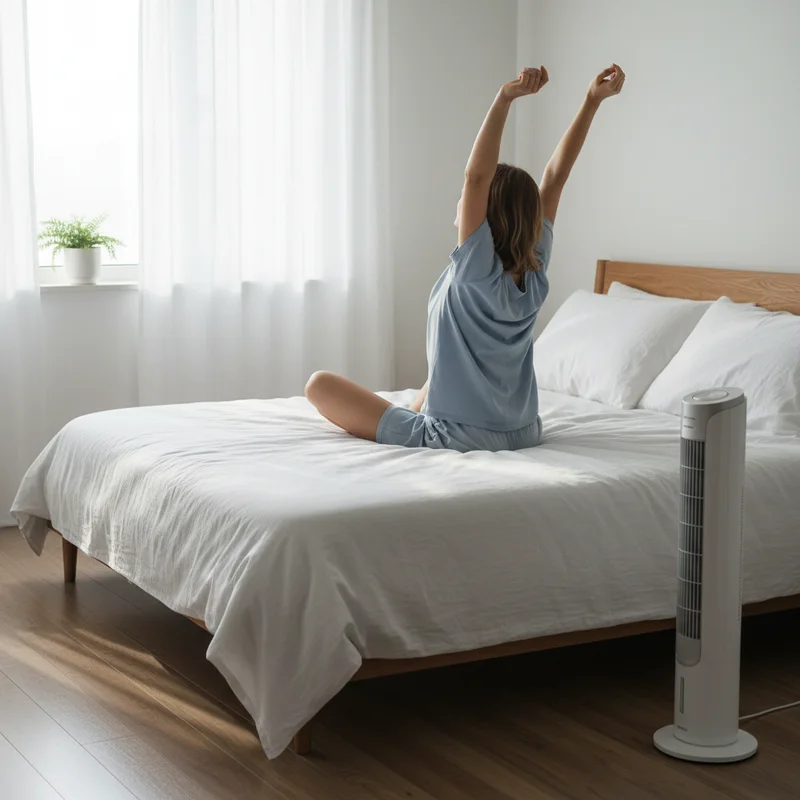
Even after a careful setup, some hot nights still leave you wrecked at sunrise. Two small things help on those mornings.
First, it's useful to actually see what the heat did. Alarmy's sleep tracking shows your total sleep time and sleep cycles, so a rough morning makes sense instead of feeling like a mystery. You can spot the nights heat broke up your rest rather than guessing.
Second, when deep-sleep loss leaves you unable to drag yourself up, a regular beep won't cut it. A mission alarm makes you complete a task, like taking a photo, shaking the phone, or solving a quick math problem, before it goes quiet. That bit of forced movement is often what finally gets you out of bed. It takes seconds to set up in the Alarmy app, so try it on the next hot night.
Run through this before bed tonight: cool, dry room around 18–20°C; a warm shower an hour or two earlier; breathable linen or cotton bedding; humidity in check with air moving; no late caffeine or heavy drinking; water nearby. Get those right and you've removed most of what keeps you awake in the heat.

Most people sleep best in a cool room around 18–20°C (mid-60s°F) with humidity between 40 and 60 percent. The exact number matters less than keeping the room cool and dry enough for your body to release heat through the night.
A hot, humid room stops your body from cooling, so it sweats to compensate and you surface from lighter sleep. Bedding that traps heat makes it worse. Breathable sheets and better airflow usually reduce it.
A warm shower 1–2 hours before bed tends to help more than a cold one. The warmth widens your blood vessels, so your body sheds heat afterward and your core temperature drops, which supports sleep onset.
Hot-weather sleep trouble usually eases once the room cools. If you struggle to sleep night after night regardless of temperature, or you suspect something like sleep apnea, it's worth talking to a healthcare professional rather than pushing through.
* This article is for informational purposes only and does not replace professional medical advice. Always consult a healthcare provider for health-related decisions.